
Petrology
Branch of geology studying rocks and their formation.

Henderson, Charles W.; Michael, Graham John.; Winstanley, J. B. · Public domain
Petrology is the branch of geology that studies rocks, including their mineralogy, composition, texture, structure, and the conditions under which they form. It is divided into three subdivisions: igneous, metamorphic, and sedimentary petrology, with an additional branch of experimental petrology that uses high-pressure, high-temperature apparatus to investigate rock formation processes.
- field
- Geology
- subdivisions
- Igneous, metamorphic, sedimentary, experimental
- methods
- Mineralogy, petrography, optical mineralogy, chemical analysis, geochemistry, geophysics
- focus
- Rock composition, texture, structure, and formation conditions
Lore & Background
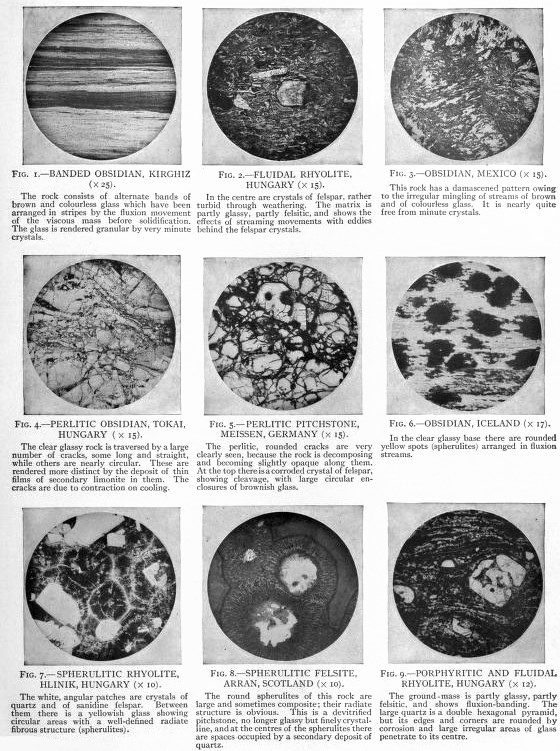
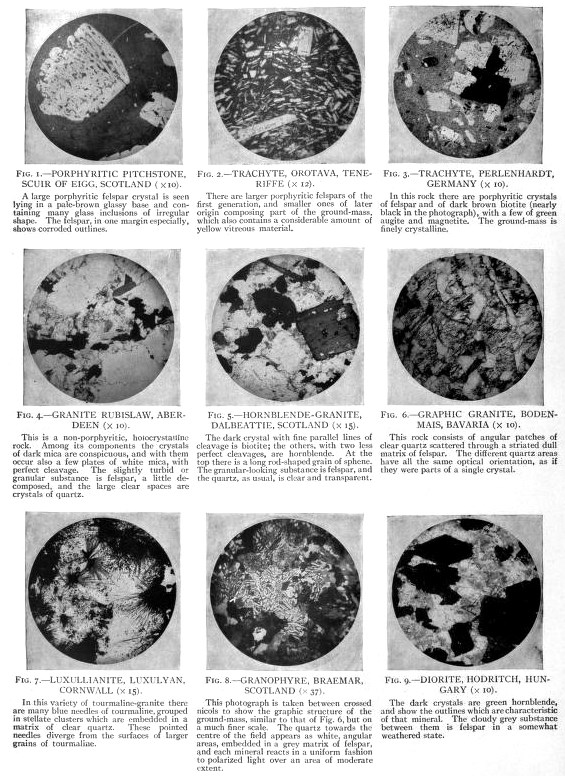
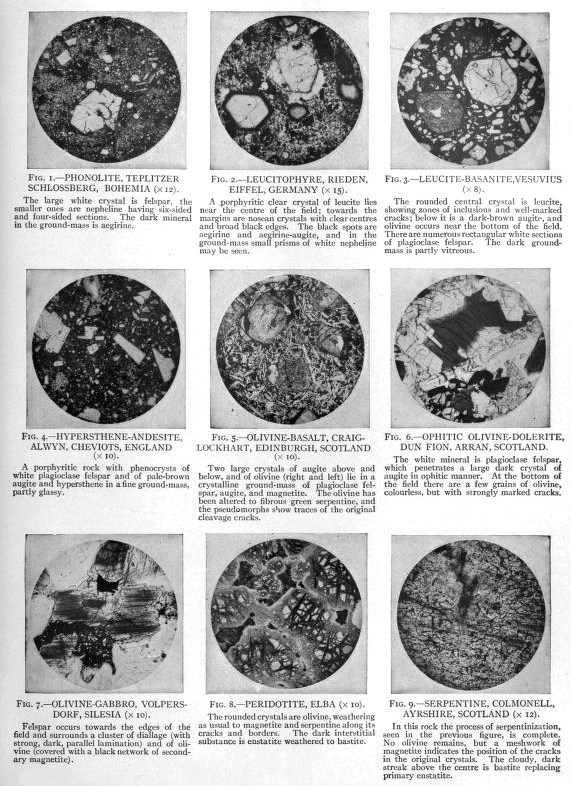
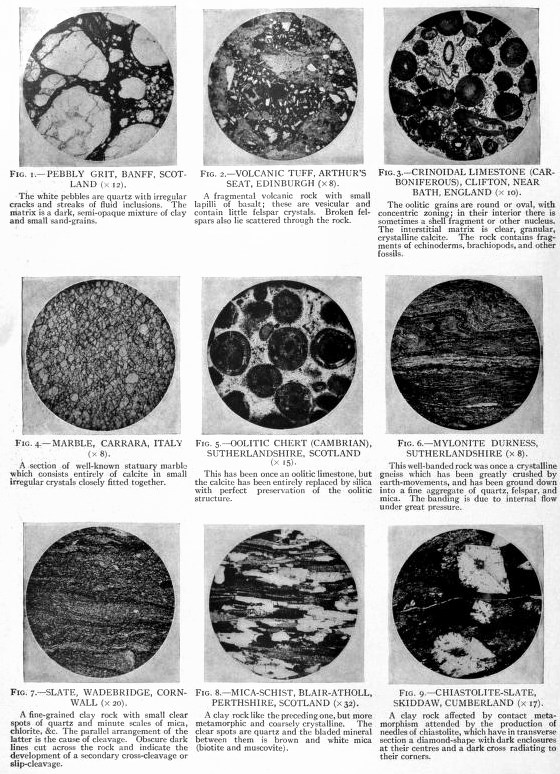
Petrology derives its name from Ancient Greek πέτρος (pétros) 'rock' and -λογία (-logía) 'study of'. The field utilizes mineralogy, petrography, optical mineralogy, and chemical analysis to describe rock composition and texture. Petrologists also incorporate principles of geochemistry and geophysics, using thermodynamic data and experiments to understand rock origins. In the petroleum industry, lithology—once approximately synonymous with petrography—is applied through mud logging, where rock cuttings from boreholes are sampled and examined under a 10× microscope.
Reader's Guide
Petrology is significant because it provides the foundational understanding of Earth's rocks and their formation processes, which is essential for interpreting geological history, resource exploration, and planetary science. The three main branches—igneous, metamorphic, and sedimentary—each focus on specific rock types and their origins. Experimental petrology has been particularly important for studying rocks from the lower crust and upper mantle that rarely reach the surface intact, as well as inaccessible materials from the Earth's lower mantle and other terrestrial planets. The work of experimental petrologists has laid a foundation for modern understanding of igneous and metamorphic processes. Sedimentary petrology increasingly uses chemistry, while igneous and metamorphic petrology commonly rely on chemical methods and phase diagrams.
Did You Know?
- Petrology has three subdivisions: igneous, metamorphic, and sedimentary petrology.
- Lithology was once approximately synonymous with petrography, but now lithology focuses on macroscopic description while petrography deals with microscopic details.
- Experimental petrology employs high-pressure, high-temperature apparatus to investigate phase relations of materials at elevated pressures and temperatures.
- In the petroleum industry, lithology is used in mud logging, where cuttings are examined under a 10× microscope.
Origins and Scope of the Discipline
Petrology derives its name from two Ancient Greek roots: "pétros," meaning rock, and "-logía," meaning study of. As a branch of geology, it encompasses the investigation of rocks in their full complexity—their mineral content, chemical composition, texture, structure, and the environmental conditions responsible for their formation. The field is organized into three primary subdivisions that mirror the three fundamental rock types: igneous, metamorphic, and sedimentary petrology. An interesting pedagogical note is that igneous and metamorphic petrology are typically taught as a unified course, owing to their shared reliance on chemistry, chemical analytical methods, and phase diagrams. Sedimentary petrology, by contrast, is commonly paired with stratigraphy because it centers on the processes that generate sedimentary rock, though modern practice is increasingly incorporating chemical approaches into this branch as well. The discipline also maintains a close but distinct relationship with lithology and petrography: lithology now refers to macroscopic, hand-sample or outcrop-scale rock description, while petrography handles the microscopic level of detail.
Methodological Toolkit and Applied Practice
Petrologists draw on a broad and integrated set of analytical tools to characterize rocks. At the core of the methodology lie mineralogy, petrography, optical mineralogy, and chemical analysis, all of which work together to describe a rock's composition and texture. Beyond these foundational techniques, the field incorporates principles from geochemistry and geophysics. Petrologists trace geochemical trends and cycles to reconstruct the origins of rocks, and they apply thermodynamic data alongside controlled experiments to deepen their understanding of how rocks form. In the petroleum industry, a related practice called mud logging puts these skills to practical use: as drill cuttings are circulated out of a borehole, they are sampled, examined under a 10× microscope, and subjected to chemical tests when necessary. The results are recorded as a graphic representation of the geological formations being penetrated, providing real-time insight into subsurface conditions. This applied dimension shows how petrological methods extend well beyond the academic laboratory into the operational world of exploration and drilling.
The Three Rock-Family Branches
Each of petrology's three principal branches corresponds to one of the three rock families. Igneous petrology examines rocks like granite and basalt that crystallized from molten rock or magma, encompassing both volcanic and plutonic varieties. Sedimentary petrology focuses on rocks such as sandstone, shale, and limestone, which are built from particles derived from pre-existing rocks or from biological and chemical deposits, typically cemented within a finer-grained matrix. Metamorphic petrology studies rocks like slate, marble, gneiss, and schist, which have undergone chemical, mineralogical, or textural transformation driven by pressure, temperature, or both; the original rock, termed the protolith, may have been of any type. The interplay among these branches is significant: a single rock can pass through all three stages of the rock cycle, and understanding the transitions between them requires the full breadth of petrological knowledge. The fact that igneous and metamorphic petrology share a heavy dependence on chemistry and phase diagrams, while sedimentary petrology aligns more closely with stratigraphic thinking, reflects the distinct physical and chemical processes at work in each rock family.
Experimental Petrology and the Inaccessible Deep Earth
Experimental petrology stands apart as a branch that employs high-pressure, high-temperature apparatus to investigate the geochemistry and phase relations of both natural and synthetic materials under extreme conditions. Its greatest value lies in addressing a fundamental problem: many rocks from the lower crust and upper mantle rarely reach the surface in their original, unaltered state. Experiments therefore become one of the primary sources of information about rocks that are entirely inaccessible—those residing in the Earth's lower mantle, as well as the mantles of other terrestrial planets and the Moon. By recreating the pressures and temperatures of these deep environments in the laboratory, experimental petrologists can observe how minerals behave, how phases transform, and how geochemical systems respond. The cumulative work of this subfield has laid a foundational framework upon which the modern understanding of both igneous and metamorphic processes has been constructed. In this sense, experimental petrology bridges the gap between surface observations and the hidden dynamics of planetary interiors, making it indispensable to the broader discipline.
Gallery


Frequently Asked Questions
Who is Petrology?
Petrology is a core branch of geology devoted to understanding rocks in their full complexity. It examines their mineral content, chemical makeup, physical texture, and the environmental conditions that produced them.
What are Petrology's powers/role?
Petrology draws on mineralogy, petrography, optical mineralogy, chemical analysis, geochemistry, and geophysics to decode how rocks form and evolve. Its central mission is to reconstruct the pressure, temperature, and chemical settings responsible for each rock type.
What are Petrology's main story arcs?
The discipline splits into three primary subdivisions—igneous, metamorphic, and sedimentary petrology—each tracking a different pathway of rock formation. A fourth track, experimental petrology, recreates extreme pressure and temperature in laboratory apparatus to test formation hypotheses.
Why is Petrology important?
By decoding rock composition and structure, Petrology supplies the evidence base for reconstructing Earth's thermal history, tectonic processes, and mineral-resource deposits. Without it, interpretations of plate tectonics, volcanic hazards, and ore exploration would lack their foundational data.
How does Petrology differ from other geology branches?
While stratigraphy focuses on layered sequences and structural geology on deformation, Petrology zeroes in on the mineralogical and chemical identity of individual rocks. It asks 'what is this rock made of and how did it get here?' rather than 'where is it or how is it folded?'
More in Geology & Earth Surface 1-23
Spotted an error? Know more?
This is a living reference — every entry is fact-audited, and reader corrections feed straight into our audit queue. Suggest an edit · See this site's audit record